
PU
Compost Use on State Highway Applications
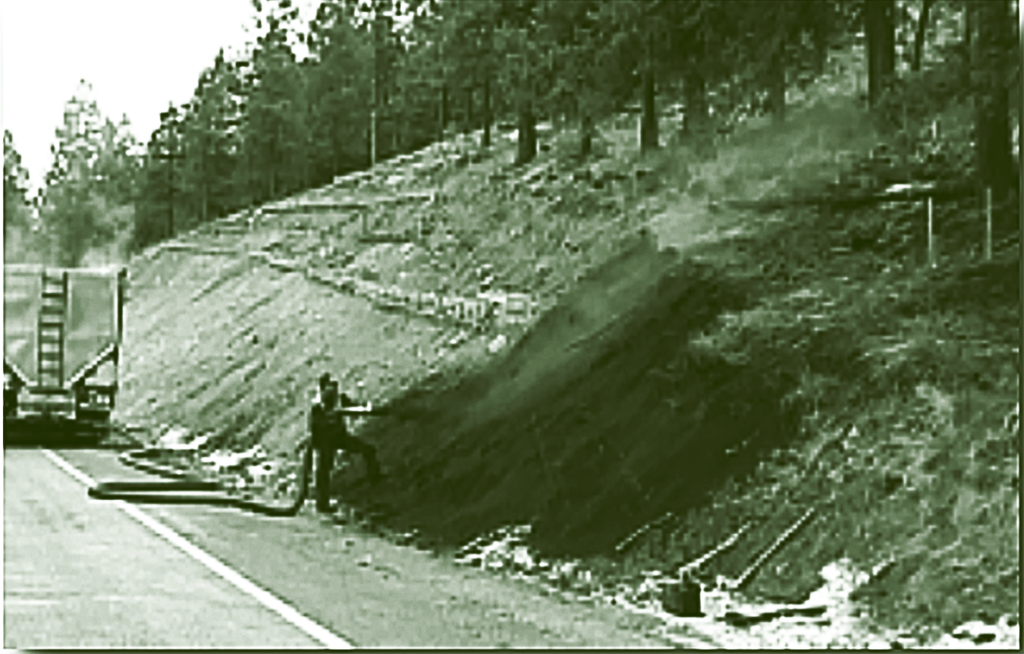
CURRENT COMPOST USAGE BY STATE DOTS In order to determine the current usage of composted products by State DOTs, as well as their potential for increased usage, various information was gathered by surveying all 50 State DOTs. Once collected, this data was compiled into the following information sets: State DOT Compost Success Stories (case studies),…
Read MoreCompost -Amended Soil Requirements
Incorporating compost into soils that are disturbed or damaged by human development (such as typical construction practices) has many benefits for the overall health of the soil ecosystem including: improved water retention, increased infiltration rates, greater binding ability, pH stabilization, and micronutrient enrichment. These micro-level soil benefits in turn, lead to significant community benefits on…
Read MoreCompost Procurement Policies

Government agencies, business, and institutions are developing environmental procurement guidelines and policies that require the purchase of compost to enhance their construction and/or landscaping operations. In addition, more and more of these entities are specifying that the compost be purchased locally, which minimizes transportation impacts, creates demand in the local market for a sustainable compost…
Read MoreConstruction Site Stormwater Runoff Control
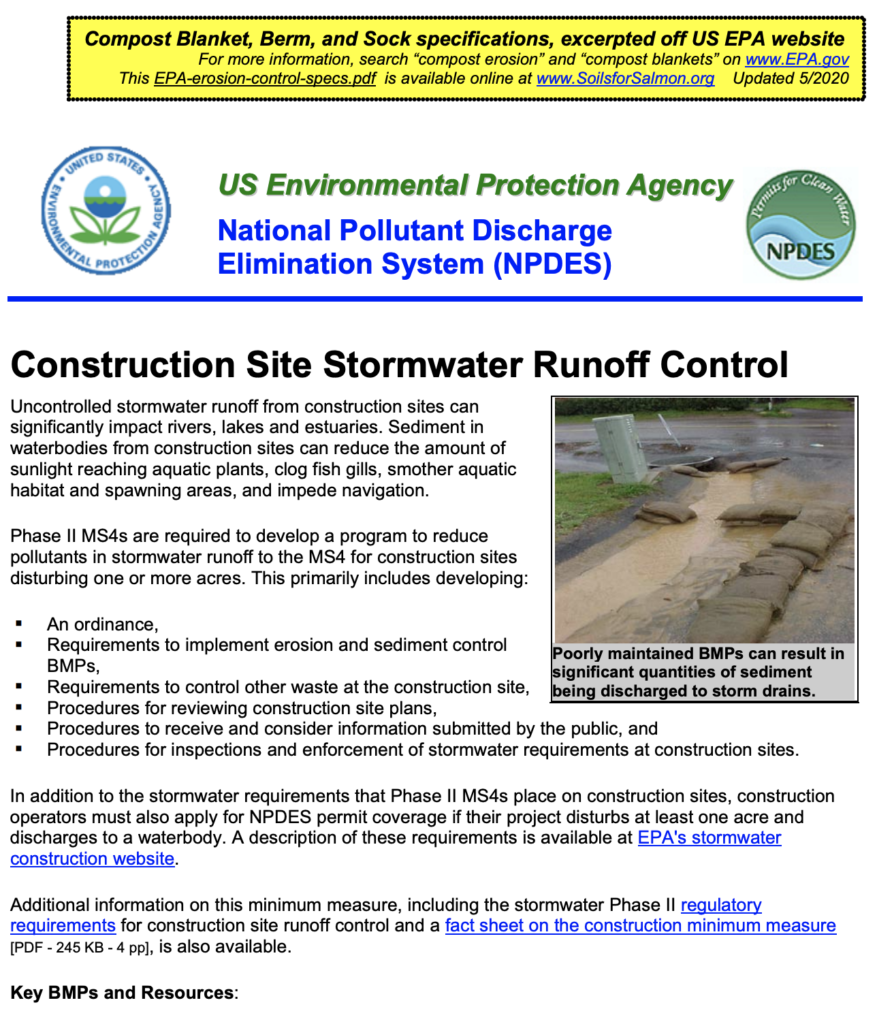
US Environmental Protection Agency National Pollutant Discharge Elimination System (NPDES) Construction Site Stormwater Runoff Control Poorly maintained BMPs can result in significant quantities of sediment being discharged to storm drains. Uncontrolled stormwater runoff from construction sites can significantly impact rivers, lakes and estuaries. Sediment in waterbodies from construction sites can reduce the amount of sunlight…
Read MoreWhen to Amend?
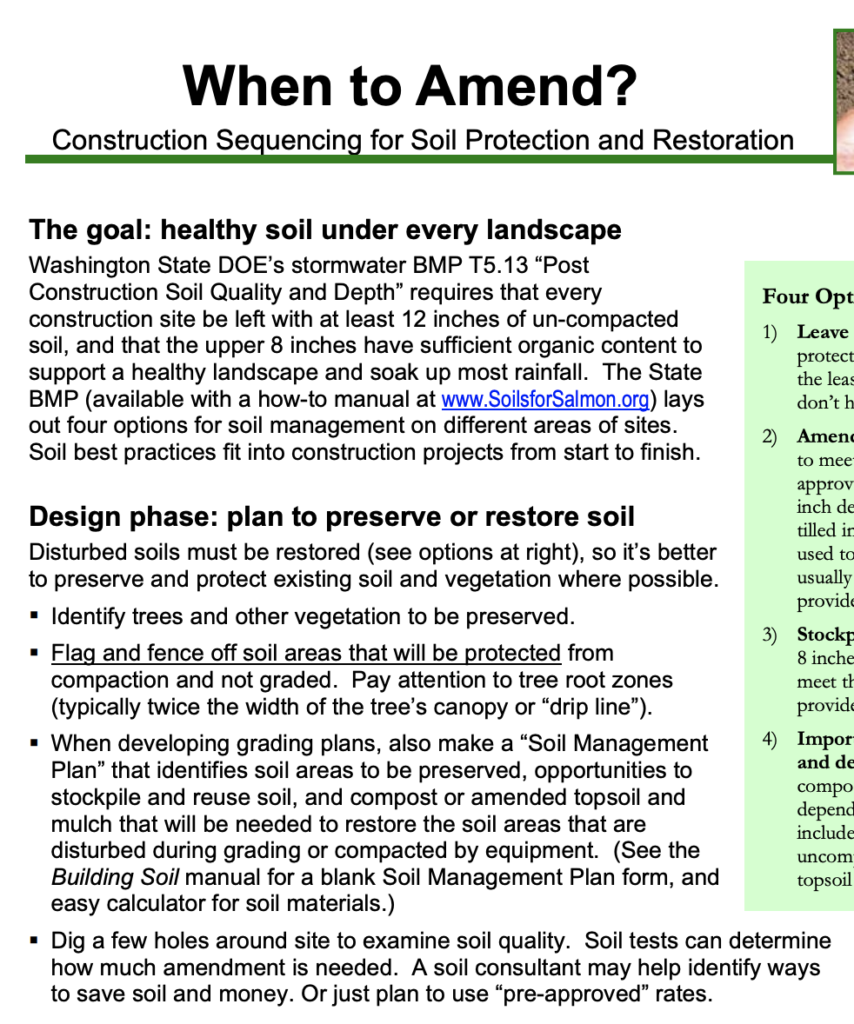
The goal: healthy soil under every landscape Washington State DOE’s stormwater BMP T5.13 “Post Construction Soil Quality and Depth” requires that every construction site be left with at least 12 inches of un-compacted soil, and that the upper 8 inches have sufficient organic content to support a healthy landscape and soak up most rainfall. 5…
Read MoreManaging Stormwater Onsite
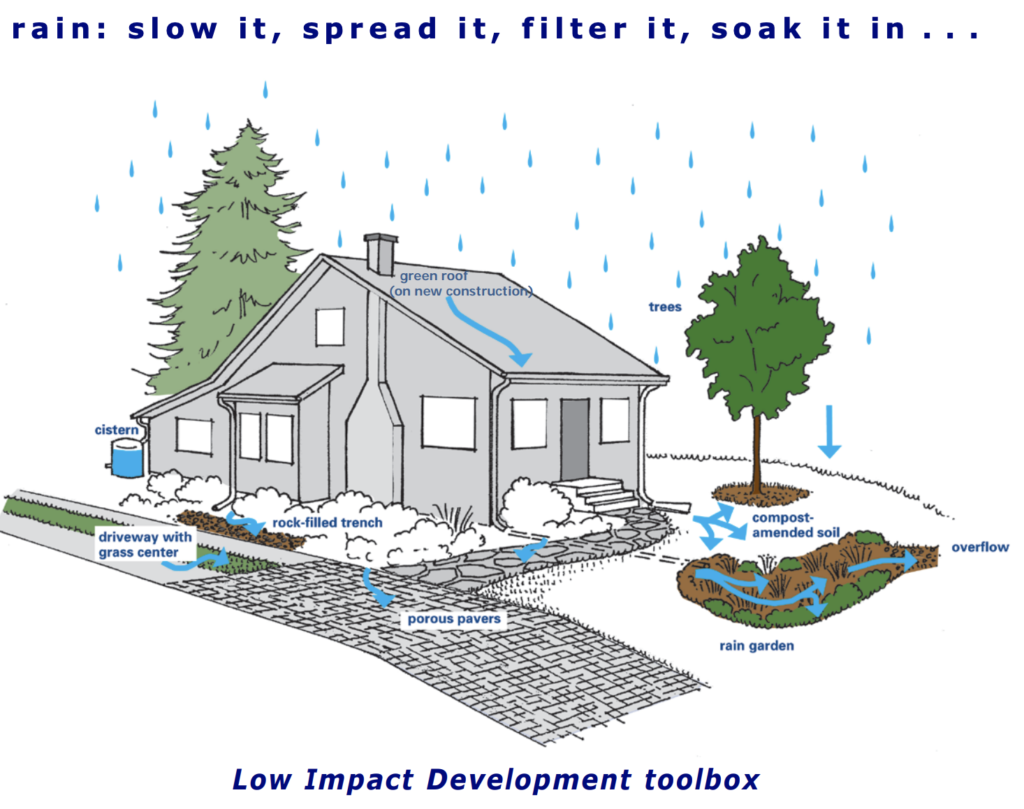
What’s the Problem? Rain falling on our roofs, roadways, and compacted soil runs off fast down ditches and pipes. This “storm water” can back up and flood homes, cause sewer overflows, and erode hillsides and stream banks. Stormwater also carries dirt, oil and metals from cars, landscape pesticides and fertilizers into Washington’s salmon spawning streams,…
Read MoreNatural Landscaping Guide
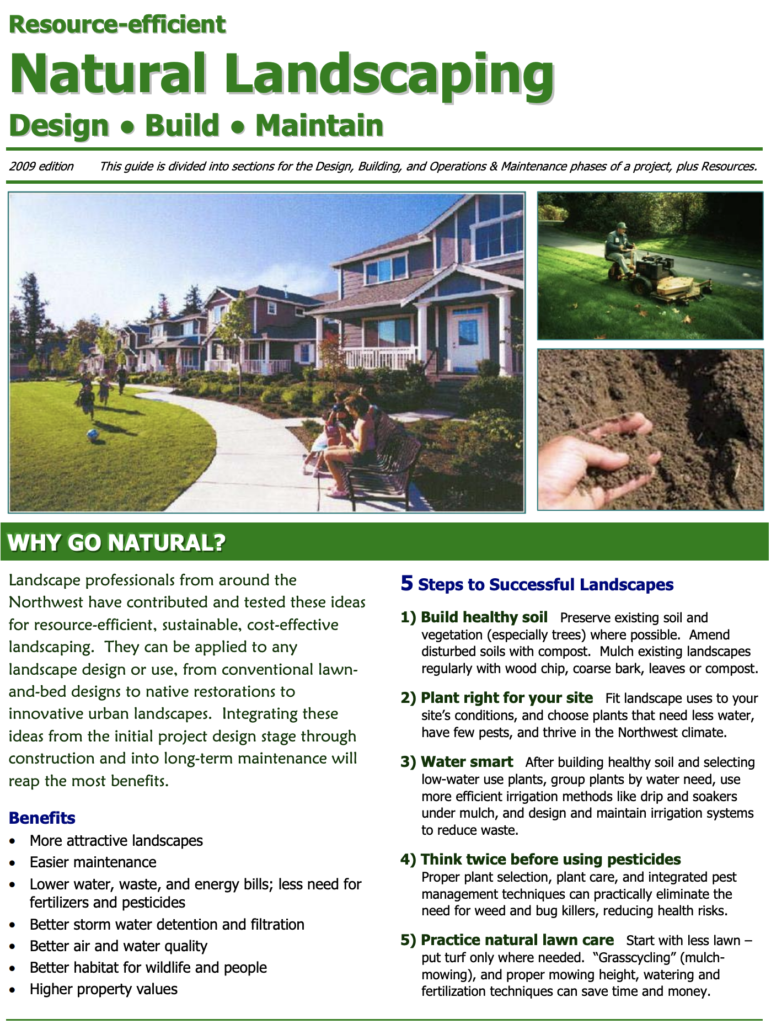
Why Go Natural? Landscape professionals from around the Northwest have contributed and tested these ideas for resource-efficient, sustainable, cost-effective landscaping. They can be applied to any landscape design or use, from conventional lawnand-bed designs to native restorations to innovative urban landscapes. Integrating these ideas from the initial project design stage through construction and into long-term…
Read MoreSoils for Salmon: Resources
Soils for Salmon: Building Soil
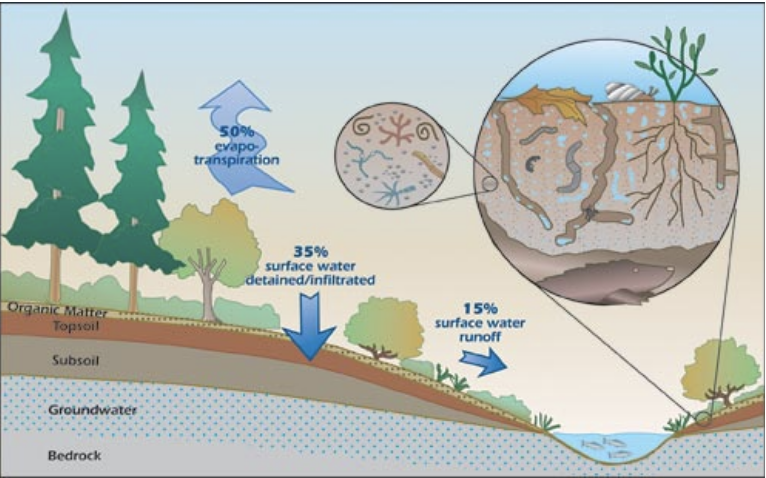
Why Build Healthy Soil? Healthy soil protects our waterways for salmon, orcas, and people. Soil performs valuable functions: nourishing plants, absorbing, filtering and cleaning stormwater runoff. These functions are often degraded during development when vegetation and soil are removed or compacted. Restoring healthy soil is essential to protecting our waterways, salmon, orcas and other wildlife,…
Read MoreUsing STA Certified Compost – Directions for Use and Specifications: LEED Credits for Specific Uses
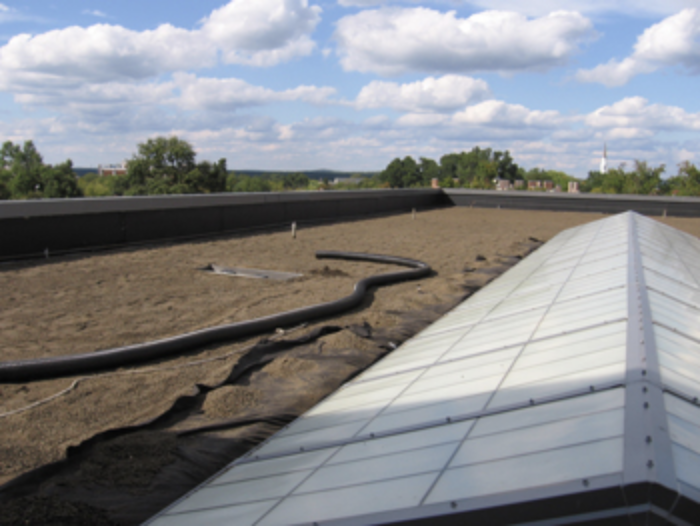
LEED Credits – Methods & Amounts for Specific Uses LEED – Leadership in Energy and Environmental Design – is an internationally recognized green building program. It provides building owners and operators with a framework for identifying and implementing practical and measurable green building design, construction, operations and maintenance solutions. LEED – Compost Specifications Compost has…
Read More